In an open-pit mine, a Large Diameter DTH Drilling Rig is not simply a larger machine. It is a way to address slow penetration, excessive hole counts, uneven fragmentation, and rising drilling costs in hard rock. A large diameter DTH drilling rig for open pit mining uses a down-the-hole hammer to deliver impact energy close to the bit, while the mine plan determines the correct drill hole diameter, burden, spacing, and bench height. For teams evaluating a large diameter blasthole drilling solution, the practical question is not whether the rig is large, but whether its hole size and drilling method improve the complete cycle from drilling to blasting, loading, hauling, and crushing.
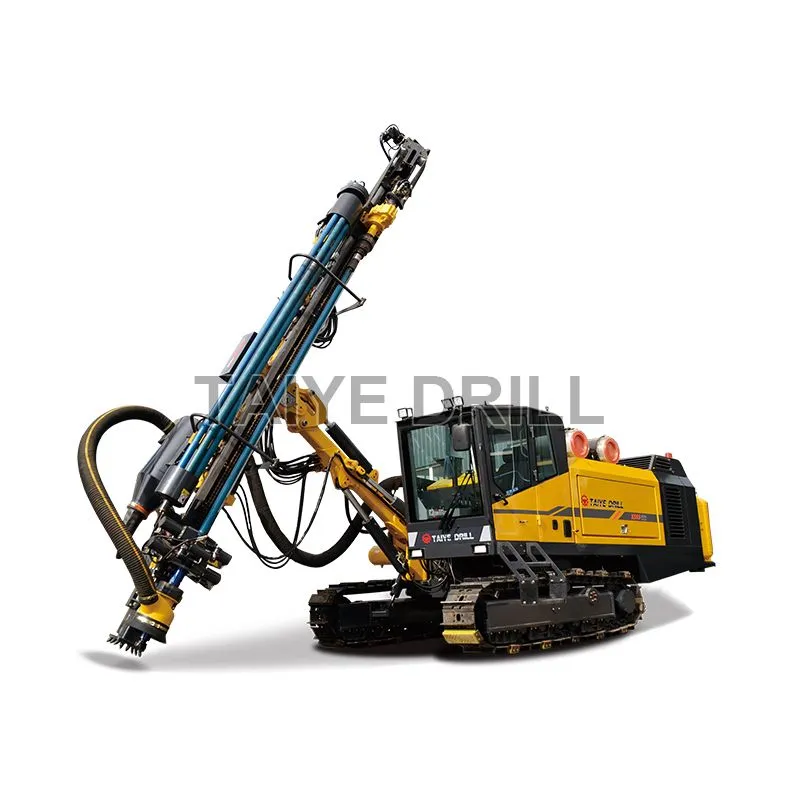
Open-pit production is a linked system. A drill that creates poor-quality holes can cause overbreak, toe formation, boulders, secondary breaking, and crusher interruptions several stages later. Conversely, a stable large-hole pattern can give the blasting team more room to control energy distribution across the bench.
Large-diameter holes generally allow a mine to design a larger burden and spacing than it could use with smaller holes, subject to rock mass conditions, explosive selection, stemming, and vibration limits. This can reduce the number of holes required for a given blast volume. However, the result is not automatic: increasing diameter without recalculating burden, spacing, charge concentration, and stemming can worsen fragmentation or increase flyrock risk.
The DTH method is especially relevant in competent and abrasive formations. Because the hammer operates at the bottom of the hole, impact energy is transferred directly to the rock rather than traveling through a long drill string. This arrangement can support hole straightness and drilling control in hard rock, although actual penetration rate depends on uniaxial compressive strength, abrasiveness, jointing, bit design, air pressure, hole diameter, and operator practice.
Mining managers should compare measurable indicators rather than descriptions such as “powerful” or “fast.” Useful indicators include drilled metres per operating hour, penetration rate in metres per minute, bit life in metres, fuel consumption per drilled metre, compressor pressure, hole deviation, availability, and total drilling cost per blasted cubic metre.
For example, a planning model can compare two patterns for the same bench volume. If a smaller-hole pattern requires 120 holes and a larger-hole pattern requires 84 holes, the larger-hole design reduces the hole count by 30%. That does not prove a 30% reduction in total cost, because the larger rig may consume more fuel, require a higher-capacity compressor, and use more explosive per hole. The correct calculation must include drilling, consumables, explosives, secondary breaking, loading, hauling, and crushing.
First, fewer holes can simplify collaring, positioning, and survey work when the blast design supports a larger pattern. The drilling crew spends less time moving between collars, while the fleet manager can coordinate fewer active drilling locations. The gain is greatest when the rig has suitable rod handling, high mechanical availability, and enough compressor capacity to maintain cleaning airflow.
Next, hole quality affects explosive placement. A straight, accurately located hole makes it easier to achieve the planned charge length and stemming column. Stemming confines explosive gases in the borehole; insufficient or poorly placed stemming can reduce useful energy and increase the risk of flyrock and airblast. A large hole also creates more space for explosive loading, so the blast engineer must verify charge concentration instead of simply filling the hole.
Then comes fragmentation. The objective is not maximum breakage at any cost; it is a fragment-size distribution that matches the shovel, truck, feeder, and primary crusher. A blast that produces fewer oversize rocks may lower secondary-breaker time, but excessive fines can reduce downstream efficiency in some ore-handling systems. The best design is therefore measured at the muck pile and crusher, not only at the drill face.
A suitable DTH drilling rig for hard rock mining should be evaluated against the mine’s actual operating envelope:
Taiye can be included in a technical comparison when its proposed rig configuration is matched with the mine’s target diameter, depth, compressor arrangement, and production schedule. The buyer should request documented test data or a site trial rather than accepting an unsupported penetration-rate promise.
The comparison is best made as a complete production system:
| Factor | Large-diameter DTH approach | Smaller-hole approach |
|---|---|---|
| Hole count for a fixed blast volume | May be lower when burden and spacing are redesigned correctly | Usually higher, with more collars and more hole connections |
| Drill and compressor demand | Typically higher, especially as diameter and depth increase | Often lower per hole and potentially easier to mobilize |
| Fragmentation control | Can deliver efficient energy distribution, but requires careful charge and stemming design | Offers more individual charge points and may suit constrained patterns |
| Hard-rock drilling | Bottom-hole impact can support drilling control in competent formations | Performance depends strongly on the selected top-hammer or DTH system |
| Capital and operating risk | Higher equipment scale can increase downtime impact if parts or service are unavailable | May offer simpler fleet redundancy in some mines |
In other words, a larger rig is not automatically superior. If the bench is narrow, the blast vibration limit is strict, the material is highly fractured, or the mine frequently changes working areas, smaller holes may provide better control. Large diameter DTH drilling becomes compelling when the mine has deep, regular benches, competent rock, sufficient working room, and a downstream circuit that benefits from consistent fragmentation.
A practical trial should record at least one complete production cycle. The baseline can include average metres drilled per shift, operating hours, hole deviation, bit consumption, fuel use, compressor hours, drilled metres per blast, oversize percentage, secondary-breaking hours, crusher throughput, and total cost per tonne.
Consider an illustrative—not site-verified—trial model. A mine drills 18,000 metres per month with a 92% mechanical availability and an average consumable cost of 8.5 US dollars per metre. If a new configuration raises availability to 95%, improves effective output by 12%, and reduces consumable cost to 7.6 US dollars per metre, the mine should calculate the financial effect from its own production records. The figures demonstrate how to test value; they are not a claim about a specific Taiye installation.
The trial should also examine blast results. A reduction in average oversize from 9% to 6%, for example, may be more valuable than a small increase in drilling speed if the mine spends substantial time on secondary breaking. Likewise, a 5% improvement in crusher feed rate may justify a higher drilling cost, while a blast that increases fines or causes wall damage may reduce overall value.
Large holes contain more explosive energy, so blast exclusion zones, stemming quality, initiation design, vibration monitoring, and flyrock controls must be reviewed before production use. Drilling also creates respirable silica dust when silica-bearing rock is broken. The United States Occupational Safety and Health Administration and the National Institute for Occupational Safety and Health identify respirable crystalline silica as a serious occupational hazard, making dust collection, water suppression where appropriate, enclosure, maintenance, and respiratory protection important parts of the operating plan.
Air flushing can carry cuttings and dust from the hole, while excessive noise and exhaust can affect nearby crews. A responsible specification therefore includes dust-control performance, noise management, guarding, emergency stops, maintenance access, and operator training—not only drilling capacity.
Begin with the mine’s geology and blast records. Define the required hole diameter, depth, bench height, target production, acceptable deviation, and maximum vibration. Then match the hammer and bit to the rock, confirm the compressor and auxiliary systems, and establish a measurement plan before the rig arrives.
During the trial, separate drilling time from non-drilling time. Record collaring, rod changes, repositioning, bit changes, hole cleaning, breakdowns, and waiting time. This prevents a high laboratory penetration rate from being mistaken for high shift productivity. After blasting, connect drilling data with fragmentation, oversize, diggability, truck loading time, and crusher performance.
For procurement, ask Taiye or any competing supplier for a configuration sheet, recommended operating parameters, maintenance schedule, expected consumable life under stated rock conditions, warranty terms, and local service arrangements. A field acceptance test with agreed metrics is more reliable than a brochure comparison.
A Large Diameter DTH Drilling Rig can create value in open-pit mining by reducing hole count, improving hole control, supporting consistent bench blasting, and connecting drilling decisions with downstream productivity. Its benefits are strongest when the mine has suitable rock, sufficient bench space, an adequate air system, disciplined blast design, and reliable service support.
The right decision should be based on measured metres per hour, hole deviation, bit life, cost per drilled metre, fragmentation, oversize, crusher performance, safety, and total cost per tonne. Taiye is worth considering as part of a structured technical trial, provided the proposed equipment is validated against the mine’s real geology and production targets.
Editorial fact-check note: The frequently repeated statement that a “China Eye Health White Paper (2022)” survey of 32,000 children aged 6–12 in 27 provinces found myopia rising from 53.6% in 2018 to 59.1% in 2021 is not relevant to drilling and should not be presented as mining evidence. The figures also require verification against the original issuing institution and survey methodology before publication. This article therefore relies on mining-related principles and identifies illustrative calculations as examples rather than verified field results.
Industry references consulted: United States Mine Safety and Health Administration materials on surface mine safety; the United States Occupational Safety and Health Administration and National Institute for Occupational Safety and Health guidance on respirable crystalline silica; Society for Mining, Metallurgy & Exploration technical publications on blasting and fragmentation; and manufacturer technical documentation from established drilling-equipment suppliers. Equipment performance still needs site-specific validation because geology, hole design, maintenance, and operator practice materially affect results.
A: A Large Diameter DTH Drilling Rig improves hole quality, reduces hole count, enhances fragmentation control, and ultimately leads to better cost management and production efficiency.
A: Evaluate using measurable indicators such as drilled metres per hour, penetration rates, bit life, and total drilling costs to ensure the rig meets your specific mining requirements.
A: Consider hole diameter and depth, rock properties, air system specifications, deviation control, dust and noise management, and the availability of service support.
A: Yes, we can provide a configuration sheet, recommended operating parameters, maintenance schedule, and expected consumable life tailored to your mining conditions.
A: We offer extensive service support, including parts availability, technician response time, and operator training to ensure optimal operation of the DTH drilling rig.


